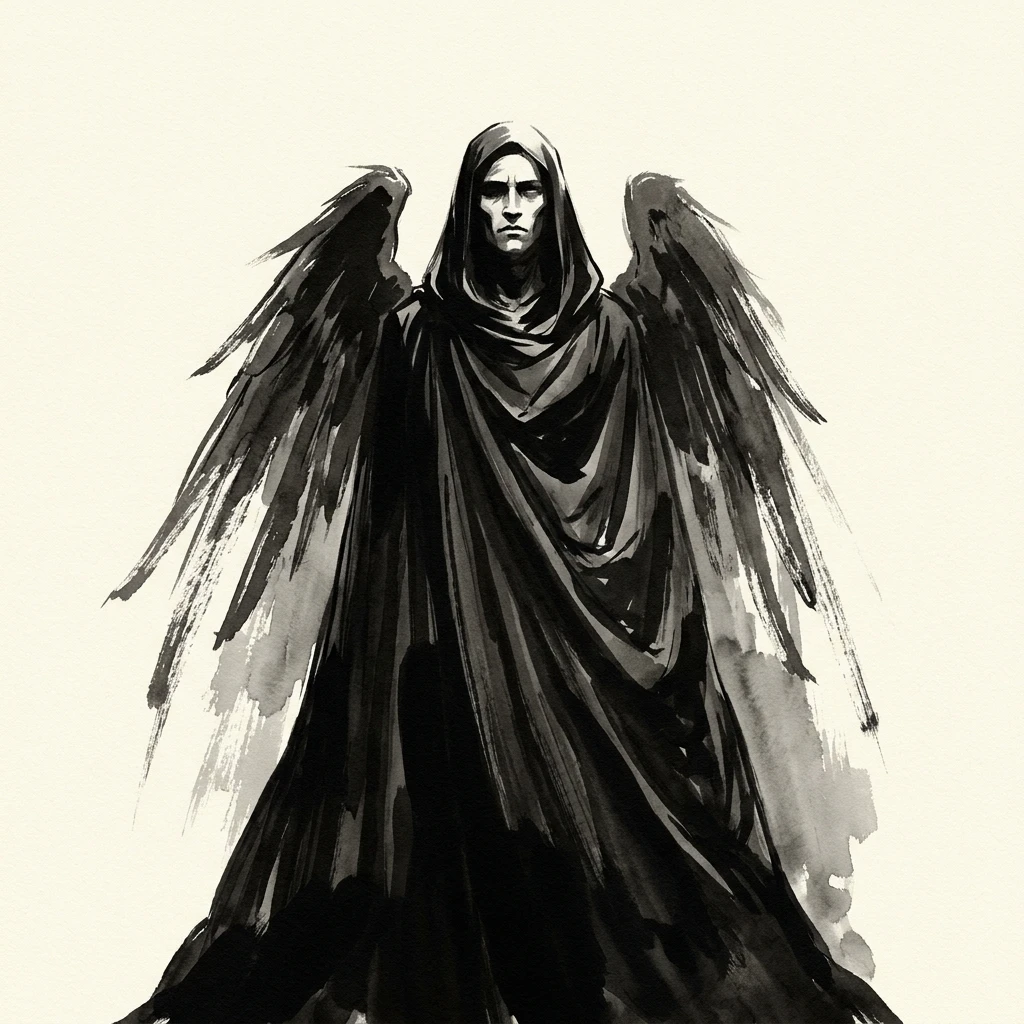
Samael is a figure in Jewish post-biblical literature whose roles differ between texts. The name also appears in Gnostic writing, where it has a different setting and explanation. A useful account begins with the particular work being read, rather than treating every occurrence as one unchanging biography.
Samael in Jewish midrash
Pirkei DeRabbi Eliezer, chapter 13, tells a story about the temptation in Eden. In Gerald Friedlander’s translation, the name is spelled Sammael. He is a great heavenly prince with twelve wings who descends with his followers and uses the serpent as his vehicle.
The story gives the serpent’s conduct an angelic instigator. That is a feature of this later interpretation of Genesis, not a personal name supplied by Genesis 3 itself. Keeping the two texts separate helps explain why someone reading only the biblical account will not find Samael named there.
The historical Jewish Encyclopedia entry on Samael, by Ludwig Blau and the editorial board, collects further traditions about accusation, destruction, and the angel of death. Its references show the breadth of the literature; they should not be read as proof that every Jewish text assigns all these roles to him.
What does the name Samael mean?
The Jewish Encyclopedia records the traditional interpretation “venom of God,” alongside another proposed origin. This is a history of interpretations, rather than a settled linguistic explanation that applies to every source.
In the Gnostic Hypostasis of the Archons, translated by Bentley Layton, a heavenly voice addresses the arrogant ruler as Samael and explains the name in terms of blindness. The passage concerns the ruler’s ignorance of a higher divine reality. It is a distinct literary setting from the midrashic account of Eden.
Is Samael the same as Satan or Lucifer?
Connections between these names need to be attributed to the work making them. A text that calls Samael an accuser or associates him with the serpent does not, by itself, establish that every story about Satan or Lucifer is also a story about Samael.
Likewise, listing Samael in a fallen-angel catalogue is a way to help readers find related traditions. It is not a statement that all religious communities recognize the same figure, explain his origin in the same way, or classify him identically.
Explore related entries
Continue with Azrael, Lucifer, the fallen-angel catalogue, or our guide to sources and traditions.