Fallen-angel traditions carry a sense of warning: rebellion and judgment. For believers, these accounts raise serious questions about obedience, evil and the holiness of God. This list of fallen angels invites you to explore those names with reverence and discernment.
The heavenly can be fearsome. In Genesis 19:12–13, the messengers warn Lot to bring his family out before the city’s destruction. Jude 6 speaks of angels who left their own habitation and await judgment in darkness. The weight of these passages deserves to be felt as well as studied.
About this list: These names come from different religious texts, folklore and later demonology, rather than a single biblical passage. Each profile identifies its own setting, so you can follow the account without blending separate traditions. For the broader name directory, see angel names A–Z.
The following list of fallen angel names was gathered from religious traditions, ancient accounts and later demonology. It brings together figures associated with rebellion, opposition or danger; their particular roles and origins are explained in the linked profiles.
The history of these names reaches through ancient cultures and Jewish, Christian and Muslim traditions. Reading them in their own settings brings both their spiritual meaning and their differences into sharper focus.
Across these traditions, names have taken different spellings, meanings and uses. Later mystical and ceremonial-magic writings add further layers to the history. Those accounts belong to their own religious settings and can be read with the same care given to the names themselves.
Name endings do not determine whether a figure is described as good or fallen. Spellings and roles differ between languages, texts and religious traditions.
List of fallen angels and fallen angel names

ANames beginning with A
BNames beginning with B
CNames beginning with C
DNames beginning with D
ENames beginning with E
FNames beginning with F
GNames beginning with G
HNames beginning with H
INames beginning with I
KNames beginning with K
LNames beginning with L
MNames beginning with M
NNames beginning with N
ONames beginning with O
PNames beginning with P
QNames beginning with Q
RNames beginning with R
SNames beginning with S
UNames beginning with U
VNames beginning with V
WNames beginning with W
XNames beginning with X
ZNames beginning with Z
What about the names of the 200 fallen angels?
1 Enoch, chapter 6 describes a group of 200 descending angels and then names their leaders. It does not supply 200 individual names in that chapter. Read the Semyaza profile for the descent and shared oath, and compare Azazel’s separate role. Names and transliterations differ between editions, so a modern list assembled from several traditions should not be presented as the complete roster from that passage.
The catalogue above also includes later demonological names. Their inclusion does not make them members of the Watcher group in 1 Enoch. See our guide to angelology sources for how to compare these materials.
An interpretation of fallen angels
The following attributed essay presents a metaphysical interpretation. Louis Charles reads fallen angels metaphorically, through the inner life and human experience. This is his personal perspective; readers who understand the scriptural accounts literally are welcome here too. The essay is preserved as an attributed interpretation alongside the traditions explored above.
What Are Fallen Angels?
Certain religions, especially those prominent in the West, teach that fallen angels, once pure messengers of God, followed the Devil (or Satan) out of Heaven and unto the Earth in rebellion against the Creator.
With this belief, it is also taught by those fallen angels now rule the earth realm as evil, angelic principalities and powers. It is claimed that this is an important spiritual conflict, largely unseen, and with heavenly, Holy angels of God combating the fallen angels who are under the charge of Satan (or Lucifer) – the Devil.
We prefer a metaphysical view of fallen angels and what they can be in our lives. Let’s look at some different interpretations to consider.
Fallen Angels As Demons
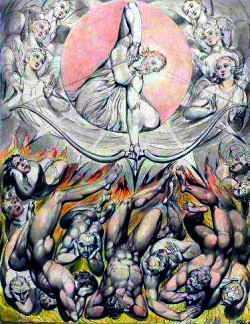 Some teachings equate fallen angels with being demons who roam the Earth looking to inflict harm upon mankind. They have even assigned them names (see Fallen Angel Names). In Fundamental Christianity, for example, it is taught that fallen angels will one day be fully loosed upon the Earth, permitted by God to wreak the worst possible havoc in order for mankind to repent and accept Jesus as savior. Those who accept Christ, they claim, will be saved from such wrath, including the eventual, eternal punishment waged by God against Satan, his fallen angels and unrepentant mankind. Yipes – that is frightening!
But these incorrect teachings about fallen angels, demons, devils, Satan, Lucifer and the like have evolved over time into the fearful beliefs many believe, today. And, the original, freeing messages became lost. By comparing ancient manuscripts primarily found within the Old and New Testaments, a misunderstanding of the original ideas (originally parables) spawned all sorts of instruction about devils. Other ancient writings, such as 1 Enoch and Jubilees, have also been used to fill in the holes of these supposed biblical lessons.
Such teachings, though, have created a great misunderstanding concerning fallen angels and even angels in general (read about Angels). Angels are messengers, and fallen angels are messengers whose message is unenlightened. Allow me to explain. When one speaks the spiritual truth or, better yet, expresses love and compassion toward another person, this is an enlightened message – words and actions that emanate from the core of one’s being. Angels, ministering spirits, deliver messages of encouragement and guidance, always given with love as the initiator.
Fallen Angels As Lost Spirits
 In contrast, fallen angels are messengers whose message does not come from a heart of love but is truly an expression of fear. They represent, symbolically, at the highest level, us: people. When we are ruled by our minds and not our inner being, our awareness, the thinking created by the brain causes us to ‘fall’ when left to run on its own. We become trapped in mental concepts of past and future, lost for a season to who we truly are, numb to our true essence. We do not live our lives in the present moment. Yes, in a sense, we become the mind; we become fallen angels, the result of the fallen messages in our heads.
The mind can produce thoughts of past and future, fear, and failure, condemnation and guilt. Such thoughts are of a lower state, the meaning of the word ‘fallen.’ These thoughts are energy, or spirit, and are debased, keeping us in constructs of the mind. In other words, they cause us to suffer. The thoughts, then, may also be viewed as lost spirits, fallen angels. We are what we think (when we allow ourselves to only think).
We could say that most of us are fallen angels, for we appear to be lost people too caught up in our earthly experience. We may be partially aware. We could be totally unaware. Few of us seem fully conscious. Our actions on the planet seem to indicate we are highly unconscious.
Ghosts: The Forgotten Fallen Angels
Let’s take the idea of fallen angels – tortured people, anguished thinking and punishing thoughts a bit further. What if a suffering soul were to die? Would the person still be lost and experience emotional pain? Yes, it is possible. Death is not the savior some may think it to be.
Let’s consider that negative entities, evil ghosts, are earthbound spirits of humans that are suffering. These spirits, still ‘fallen angels,’ interact with those of us in bodies, sometimes communicating their messages to us. Often, the ghost messages are of their own fears – not something one would want to rely upon as wisdom. (People, even ghosts, tend to interpret the world and others through their own inner struggles.)
A spirit remains here with the living for numerous reasons. Perhaps the person has unfinished business, or maybe the person feels compelled to deliver a parting message to someone. For whatever reason a disembodied spirit remains attached to this realm, ultimately it is due to fear and a strong identification with this world of forms. This fear and attachment paralyzes the person, suspending them in a state of mental anguish – hell.
If we receive messages from others who are of an unstable state of mind, would you expect it to be enlightened? Would it be truth for you or me? Not likely.
The Resurrection of Fallen Angels
 The use of the word fallen is a reminder of who we truly are, something much greater than we think. Do you believe that you are feeble, lost and alone? That is mind talk, fallen messengers, lowly thoughts and thinking. To move beyond the mind trap, we only need to step back behind our thoughts and be aware.
Heaven is another word used to label the greater force behind everything that is, for Spirit, and it conveys the idea of higher elevation – a higher place. When we are at peace, and living our lives through love and truth, we are indeed in a higher position. We may call this light.
Upon death of the physical body, it is said that the spirit is free and normally gravitates toward light, continuing the life-journey in a higher state. Why the light? The light can be our cleansing process after death of the form. The light is consciousness or awareness – a coming back to the real you. It was always there; often, we just lose sight of it when we are caught up in form.
Within the light, the person is reunited, we might say, with their soul, their real essence. This letting go of past pains and future plans takes place during an instantaneous life-review. Mental issues that were created while in physical form can now be worked through more quickly.
The mind produces fear, not the soul or core of a person. If a spirit decides to not enter into the light after exiting the body, they will miss the mental cleansing. When this happens, it is because of fear. The unconscious soul remains trapped in mental concepts and attempts to remain in the world of form. The soul is trapped by the mind and has become what we call “a ghost” (a “shade” or shadow of the real person).
Ghosts suffer, to some degree, from the fear of loss, fear of the unknown, fear of punishment, guilt, shame, doubt, worry or whatever – all are forms of fear produced by over-thinking. A spirit who decides to remain behind is not able to ‘rise above’ this condition easily. The ghost maintains a strong identification with physical forms.
The ascension of the soul, a resurrection from being trapped under self-induced mind control, cannot occur without an awakening. So, the restless spirit may remain isolated, afraid and quite attached to the physical world the person felt so comfortable with. And so, these fallen angels have missed their opportunity to be whole, cleansed by the love of a new comprehension.
The perceived misfortune of fallen angels is temporary, thankfully. All of us, the whole of existence is ever-growing, always expanding, progressing and being freed from our false beliefs, from our fear. It is love that frees fallen angels, even if through suffering; and it is love that will eventually purge all states of disconnection.
The Truth of Being
Wise and aware spirits, I believe, do interact with us, observing, guiding and bringing direction. They are with us during this process in form. They are angels, caring about the whole of mankind and its elevation unto knowing truth and peace. What truth, you say? The truth that we are connected – one. A true angel maintains a strong connection with ‘being.’
We are eternal spirits, one Spirit energy. Ultimately, there is no death, no punishment, or loss. The body may pass but, yet, we still remain – aware. There is nothing to fear. Fearful mental concepts are illusionary. They are beliefs created by the mind and not real. We created these beliefs, and suffering, because we believed the body and its story to be our person. But our experiences of suffering were merely indicators that we needed to perceive life differently. We viewed external life experiences as more important than the inner life. That’s O.K. We are learning.
FOR YOUR AWARENESS AND STUDY
We have a primary list of passages found in ancient manuscripts, such as the Bible, that are used to promote fearful, false ideas concerning angels. By making people believe that these passages are to be understood literally, they are misused to create fear in the minds of those who choose to listen. To grasp such works more deeply, seek the figurative meaning behind them. That is what the ancient authors would have desired.
The following examples of ancient writings are to be understood metaphorically, especially the sayings of Jesus found within the four gospels. It is the same with the Bible’s Revelation, known to be a book of symbolism.
Genesis 6:1, Deuteronomy 32:8, I Samuel 16:14; 18:10; 19:9, I Kings 22:19, Psalm 82:1, Isaiah 26:14, Enoch 6:1; 7:1; 10:11; 12:4; 15:8, Jubilees 5:1-2, 6, Matthew 25:41, Ephesians 6:12, Hebrews 2:5, Jude 6, I Peter 3:19, II Peter 2:4, Revelation 9:11, 13.