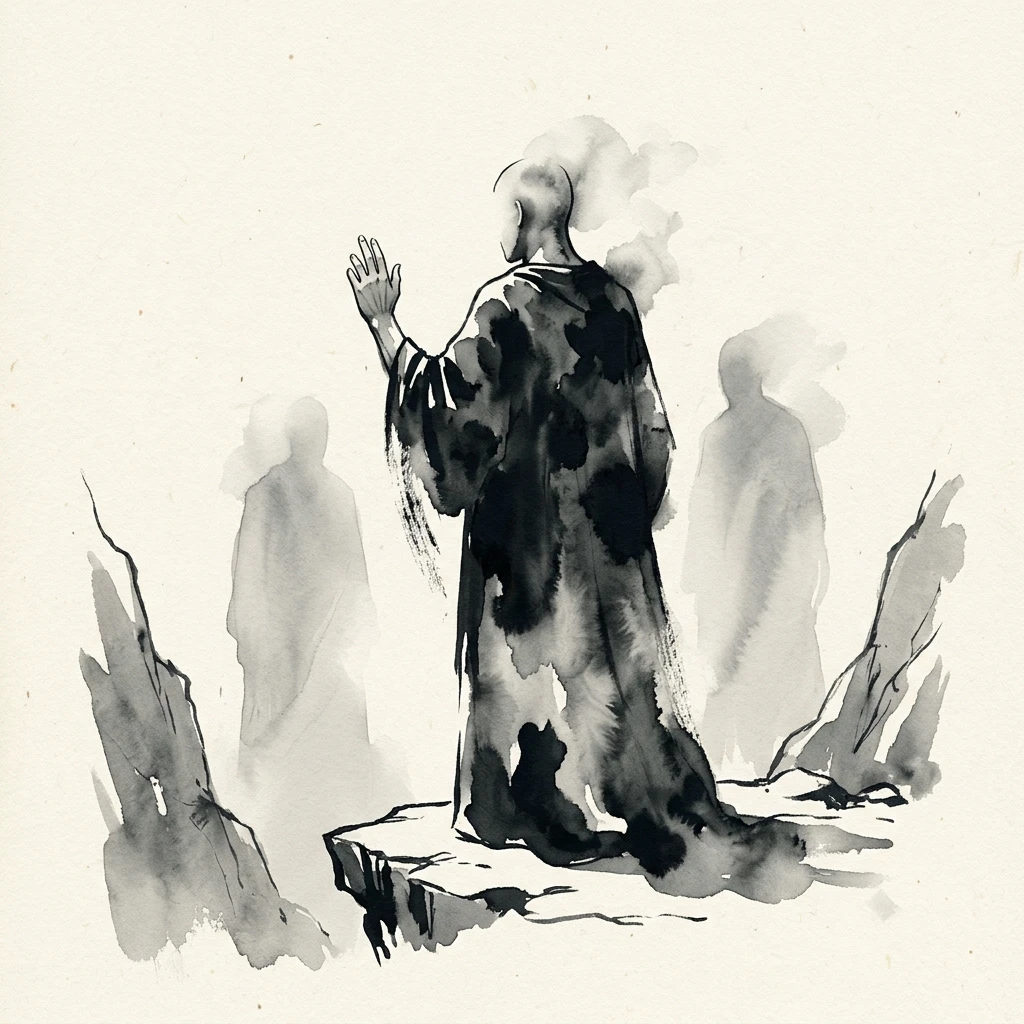
Semyaza is the leader of the Watchers in the descent narrative of 1 Enoch. The story describes a company of heavenly beings who take human wives, teach forbidden knowledge, and face judgment. Names such as Semjaza and Semiazaz reflect the spellings encountered in editions of this story.
The descent of the Watchers
In 1 Enoch 6:1–6, the angels desire the daughters of human beings. Their leader fears that the others will abandon their plan and leave him to bear the guilt alone. They answer by binding themselves together through an oath.
The passage places their descent on Mount Hermon and gives the total as two hundred. The shared oath is important: the narrative presents collective responsibility, not simply one angel acting without companions.
Does Enoch give 200 fallen-angel names?
Chapter 6 gives names of leaders and calls them chiefs of tens. It does not supply two hundred individual names. Lists and spellings also vary between editions and manuscript traditions, so a modern name list should identify which text it follows.
In Charles’s printed chapter 6 list, names include Kokabiel, Danel, and Armaros. The description “two hundred Watchers” refers to the company’s size. It should not be mistaken for the length of a surviving catalogue of distinct personal names.
Teaching and punishment
1 Enoch 8:3 associates Semjaza with enchantments and root-cutting. The passage assigns other teachings to other named figures. It is therefore misleading to attach every forbidden art in the chapter to Semyaza alone.
In 1 Enoch 10:11–14, Michael is instructed to bind Semyaza and his associates after the destruction of their offspring. Their confinement awaits the appointed judgment.
Semyaza and Azazel are not interchangeable names
The same chapter gives Raphael a separate commission concerning Azazel. This is a useful distinction when reading summaries: Semyaza’s leadership and shared oath belong to one strand of the narrative, while Azazel is singled out for particular teachings and punishment.
Later stories about Shemhazai need to be read in their own textual setting. A similar name is a starting point for comparison, rather than a reason to attach every later episode to the story told in 1 Enoch.
Explore related entries
Continue with Azazel, Kokabiel, Danel, Michael, the fallen-angel catalogue, or our guide to sources and traditions.